The Bioactive Matrix: Honey as a Functional Ingredient
In industrial product formulation, honey is increasingly classified not merely as a clean-label sweetener, but as a complex biochemical matrix.
Comprising a supersaturated carbohydrate solution infused with organic acids, enzymes, and secondary metabolites, honey serves as a highly functional, bioactive vehicle in the food-tech, nutraceutical, and dermocosmetic sectors.

The Biochemistry of the Matrix
Beyond its carbohydrate profile (predominantly fructose and glucose), honey’s functional efficacy is driven by its minor constituents:
Enzymatic Activity: The presence of bee-derived enzymes, particularly glucose oxidase, catalyzes the conversion of glucose into gluconic acid and hydrogen peroxide, providing natural preservative and antimicrobial properties.
Phytochemical Diversity: Rich in phenolic acids and flavonoids (such as caffeic acid and quercetin), wild-harvested honeys offer documented antioxidant and anti-inflammatory activity.
Glycemic & Crystallization Dynamics: The specific fructose-to-glucose ratio of an origin determines both its crystallization rate and glycemic index (GI), with high-fructose varieties remaining liquid longer and offering a more gradual metabolic response.
Industrial Formulation & Application
Because of its unique physical-chemical properties, honey is utilized as an active ingredient across three major sectors:
Nutraceuticals (Bio-Carrier): Honey acts as an effective, highly bioavailable carrier for botanical extracts and propolis, enhancing the stability and delivery of active phytochemicals in wellness formulas.
Dermocosmetics: Its natural humectant properties allow it to draw and retain moisture, while its low pH (typically 3.5 to 4.5) supports skin barrier repair and microbiome balance.
Gourmet Food-Tech: In premium culinary applications, its complex terroir-specific volatile compounds offer unique sensory profiles that cannot be replicated by synthetic sweeteners.
Physical-Chemical Quality Assurance
For industrial-scale applications, honey must meet strict technical parameters to ensure stability and safety:
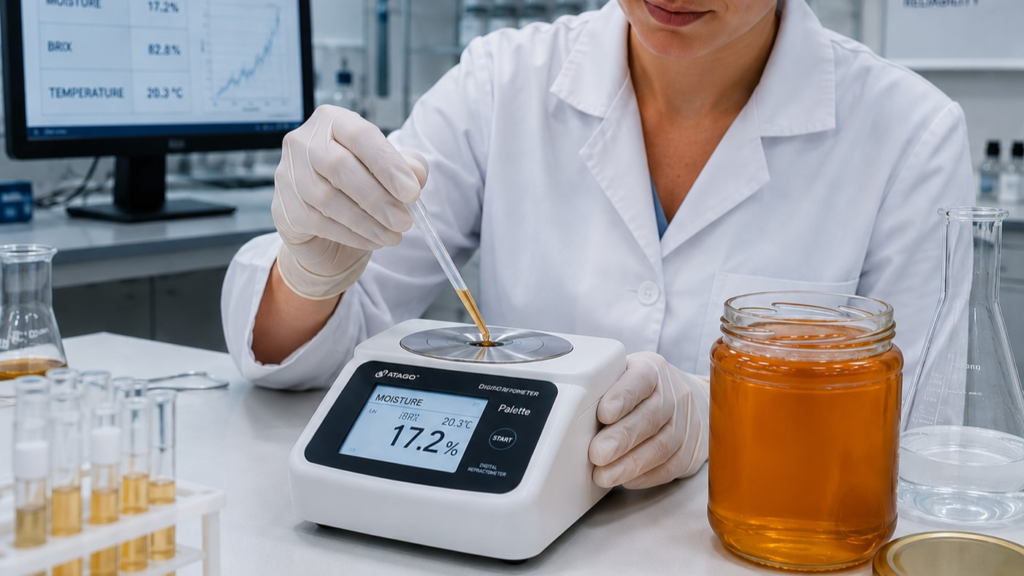
Moisture Content (
≤18.5%): Keeping moisture levels strictly at or below 18.5% is critical to prevent natural yeast activity and fermentation during storage and shipping.HMF Levels (
<30mg/kg): Measuring Hydroxymethylfurfural (HMF) is the industry standard for verifying freshness. Low HMF levels prove that the honey has not been subjected to excessive heat treatment or improper storage, preserving its delicate enzymatic activity.
Socio-Ecological Traceability
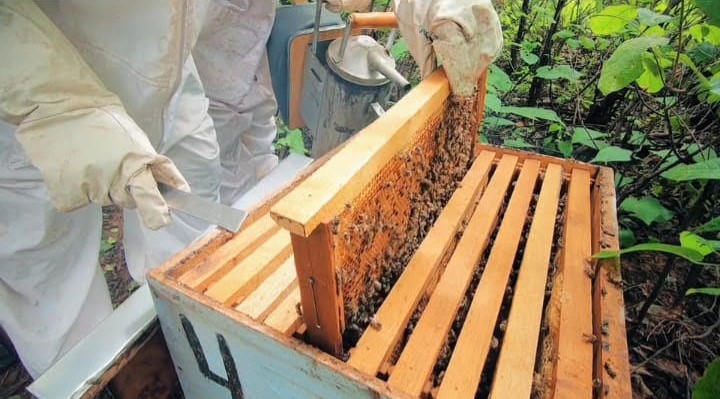
Unlike mass-market, highly blended commodities, premium functional honeys rely on strict origin-specific sourcing. In biomes like Brazil’s semi-arid Caatinga, apiculture is managed by smallholder cooperatives. Because the bees forage exclusively on native medicinal flora, the resulting honey maintains a distinct, highly active chemical profile.
This cooperative model provides essential economic stability in drought-challenged regions while ensuring that the honey carries authentic, auditable Fairtrade and Organic certifications.
Sourcing Standardized Bulk Honey
For brands requiring verified technical specifications and complete supply chain transparency, Solora Global Trading provides direct access to audited Brazilian cooperatives. Our portfolio—including QIMA IBD-certified Organic Caatinga honey and specialized Atlantic Forest varieties — is strictly verified to guarantee moisture levels ≤18.5% and HMF levels well under the 30 mg/kg threshold, ensuring optimal stability for functional formulations.