The Great UK Honey Crisis: Why 96% of Mass-Market Honey is Under Suspicion
The UK honey market is facing a quiet but severe crisis of integrity. Recent testing initiatives, economic data, and major industry disruptions suggest that a significant percentage of the honey sold on UK supermarket shelves may not be pure honey at all.
From canceled global competitions to suspicious laboratory results, the evidence points toward a highly organized, low-cost supply chain that has quietly normalized adulterated products.
The Red Flags: Canceled Awards and Failed Tests
The scale of the issue first became apparent through international beekeeping bodies and official investigations:
Global Competitions Halt: The World Beekeeping Awards took the unprecedented step of canceling its “best honey” category in both 2023 and 2025 due to widespread fears of adulteration among submitted entries.
The EU Investigation (2023): A report by the European Commission found that 46% of all honeys imported into the EU were suspicious of being adulterated. Crucially, all 10 samples sourced from the UK that were tested in this study failed the purity criteria.
UK Retail Testing (2024): In a more recent independent study specifically targeting UK supermarkets, 96% (24 out of 25) of the honey samples tested were flagged as suspicious.
Despite these findings, the Food Standards Agency (FSA) has reported very few confirmed cases of prosecution. This gap exists because modern adulteration is highly sophisticated, making it difficult to prove definitively in a court of law.
The Math of Cheap Imports: Why Pure Honey Can’t Compete
To understand why the UK market is flooded with suspicious honey, one has to look at the extreme price differences between domestic production and cheap imports.
The UK is heavily dependent on foreign supply, importing 86% of its honey. A staggering 76.7% of these imports come from China (compared to the EU, which imports only 13.5% of its honey from China).
The economics of these trade routes defy natural farming realities:
The £0.84 Import: Bulk honey imported from China can enter the UK at a wholesale cost of just £0.84 per kilogram.
The £12.00 Cost of Production: By contrast, independent UK beekeepers required approximately £12.00 per kilogram just to break even in 2019.
Price Stagnation: Despite massive food inflation over the last decade, the average price of supermarket honey has risen barely 1% annually.
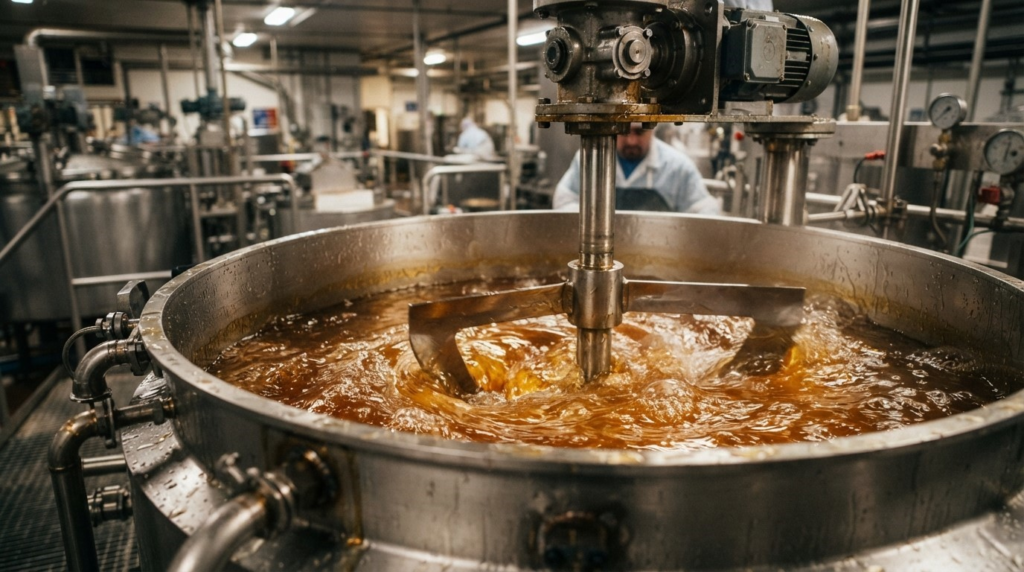
This extreme price suppression is maintained through massive market consolidation. A small number of dominant packing operations control the vast majority of the UK retail honey supply, including nearly all supermarket own-label brands. To maintain these highly competitive shelf prices, mass-market honey is routinely blended from multiple countries and undergoes heavy industrial filtering and heat treatment to ensure a uniform appearance.
How Honey is “Stretched”
Pure honey is a complex natural substance made by bees from floral nectar. However, mass-market honey is frequently altered using three primary methods:
C3 Plant Syrups: Bulking real honey out with cheap, industrially produced syrups made from rice, wheat, or sugar beet.
Overfeeding Sugar: Instead of letting bees forage naturally, beekeepers feed them massive amounts of sugar syrup directly inside the hive, which the bees then store as “honey.”
Immature Harvesting: Harvesting the honey before the bees have naturally evaporated the water content. This watery, immature honey is then industrially dried and heavily heat-treated to prevent natural crystallization.
The Testing Loophole
Standard laboratory tests, including Nuclear Magnetic Resonance (NMR) and stable isotope ratio analysis, are highly advanced but not always 100% definitive on their own. Because blended honeys are chemically complex, laboratories often classify results as “suspicious” rather than “definitively fake.”
Furthermore, UK honey testing standards are suggested by experts to be lower than those in the EU, making it easier for adulterated, low-cost blends to enter the UK supply chain legally.
True, raw honey naturally varies in color, texture, and flavor based on the flower, weather, and season. It also naturally crystallizes over time. The uniform, crystal-clear, liquid honey found in cheap supermarket squeezy bottles is a market-driven creation — one that relies on heavy processing, blending, and heat treatment to keep it unnaturally liquid and uniform.
Commercial Sourcing
For organizations, manufacturers, and buyers requiring absolute purity and transparency, navigating this compromised market is a significant challenge. Avoiding highly blended, multi-origin commodities is the first step toward securing authentic ingredients.
Solora Global Trading offers an alternative to mass-market blends. We source single-origin, certified PGI Organic and conventional honeys directly from audited cooperatives in Brazil. By providing full physical-chemical testing documentation (including guaranteed moisture ≤ 18.5% and low HMF levels), we ensure absolute purity and supply chain transparency for premium commercial applications.